NFPA 25 Inspection Colorado: Building a Fire Protection Calendar That Matches Required Intervals
If you manage a commercial building in Colorado, the hardest part of fire protection usually is not buying the equipment. It is keeping the inspection, testing, and maintenance work organized after the install is long finished and the building is busy again. Systems age, tenants change, remodels happen, staff turns over, and before long nobody is quite sure which valve was checked last month, which alarm device is due for testing, or whether the kitchen suppression contractor and the sprinkler contractor are stepping on each other’s schedules.
That is where a real calendar matters.
An effective fire protection calendar is not a generic reminder that says “schedule annual inspection.” It is a working document built around the actual intervals required by the standards that apply to your systems. For water-based systems, that usually means NFPA 25 inspection Colorado planning. For alarm systems, it often means pairing that plan with NFPA 72 fire alarm testing Denver requirements and with local code enforcement expectations. In Denver and nearby jurisdictions, you also have to keep local amendments in view because the adopted code is not always a word-for-word copy of the base model text.
A good calendar does three things at once. It keeps you on time, it prevents small deficiencies from turning into impairments, and it reduces the chaos that comes from scrambling before an inspector arrives. I have seen buildings with excellent equipment run into trouble simply because nobody had mapped the intervals view details into a practical year-round schedule. I have also seen older properties stay in solid shape because the owner had a clean calendar, a dependable record trail, and a habit of fixing issues when they were still cheap.
Why the calendar has to start with the standards, not with convenience
NFPA 25 is the primary standard for inspection, testing, and maintenance of water-based fire protection systems. The important point for building owners is simple: it sets minimum frequencies for many tasks. Those tasks do not all happen on one annual visit. Some occur monthly, some quarterly, some semiannually, some annually, and some on multi-year cycles.
That is where a lot of calendars go wrong. Somebody books one big “sprinkler inspection” every year and assumes the whole requirement is covered. It is not that simple. Fire sprinkler inspection frequency Colorado planning has to reflect the spread of intervals. If your building has multiple system types, the schedule gets more layered.
Take a property with a wet sprinkler system in conditioned office space, a dry pipe sprinkler system Colorado setup protecting an unheated loading area, and a pre action sprinkler system Denver data room or archive area. Those systems may live under the same roof, but they do not behave the same way and they should not be treated as one line item on a maintenance spreadsheet. Add a commercial kitchen fire suppression Denver system in a restaurant tenant space and now the calendar needs a cross-trade view, not just a sprinkler view.
A practical calendar also helps when the authority having jurisdiction asks questions. Denver adopts the International Code Council family of codes with local amendments, and local fire and building requirements can differ from the model code language people are used to seeing elsewhere. That means the calendar should not be copied from another state or another city and assumed to be correct. The local fire marshal or AHJ should always be part of the planning conversation when there is any doubt.
The buildings that need more thought than others
Some properties are straightforward. A newer office building with stable occupancy and a conventional wet system is easier to organize. Others need a tighter grip.
Colorado weather is one reason. Freeze risk changes the conversation. If you have attic piping, exterior canopies, parking structures, dock areas, or any zone that is not consistently heated, sprinkler freeze protection Colorado issues should be part of the annual planning discussion. A system that works fine on a warm September walk-through can become a headache in January.
I have seen owners underestimate this because the interior tenant areas are comfortable year-round. Then someone opens an overhead door all winter, a unit heater fails, or a remodel alters airflow in a way nobody expected. Suddenly the fire protection contractor is no longer doing routine maintenance. They are helping respond to a freeze-related emergency, and the cost and disruption are much worse than the original preventive work would have been.
Special hazard spaces also deserve their own calendar logic. A clean agent fire suppression Colorado system protecting electronics or mission-critical equipment usually lives on a different rhythm than a standard sprinkler riser room. The same goes for commercial kitchens, where grease-producing appliances and hood protection systems add another layer of service planning. If your building includes all of these, the calendar should bring them together while still preserving the differences.
What a workable annual fire protection calendar looks like
The best calendars are built around intervals first and vendors second. In other words, you start with what must happen and how often, then decide who is qualified to perform each task and when those visits should occur.
A solid framework usually includes these five scheduling anchors:
- Monthly checks for items that require frequent visual confirmation or basic status review.
- Quarterly work for components that need more formal recurring attention.
- Semiannual visits where applicable, especially when a system or device class falls on that interval.
- Annual inspections and tests that require broader coordination, access to occupied spaces, or off-hours planning.
- Multi-year events that are easy to miss because they fall outside the normal yearly budget cycle.
That structure sounds simple, but the details matter. A monthly checkpoint should not be buried in the same pile as annual testing because monthly work is often what catches the issue before it grows. Something as ordinary as a control valve position, room condition, or physical obstruction can become a serious deficiency if it goes unnoticed for several months.
For many owners, the easiest way to make the calendar real is to assign each interval to a fixed week in the month or quarter. For example, the first full week of each month becomes status review week. The second quarter becomes the preferred window for larger annual testing. The idea is not to guess at code language. The idea is to create a repeatable internal rhythm that supports compliance with the required intervals.
Matching the calendar to system type
A building with only one sprinkler configuration is easier to manage than a mixed-use property. Once multiple system types appear, the service calendar should reflect that complexity.
A dry pipe sprinkler system Colorado installation often shows up where freeze exposure is a concern. That system choice solves one problem but introduces another layer of maintenance attention. The calendar should make sure the people scheduling service understand that dry systems are not interchangeable with wet systems from a maintenance planning standpoint.
A pre action sprinkler system Denver application raises the stakes in a different way. These systems are commonly associated with spaces where accidental water discharge would be especially disruptive. Because of that, owners tend to be highly sensitive to impairments, trip testing logistics, tenant coordination, and documentation. If the building contains records, electronics, or controlled environments, downtime planning becomes part of the calendar too.
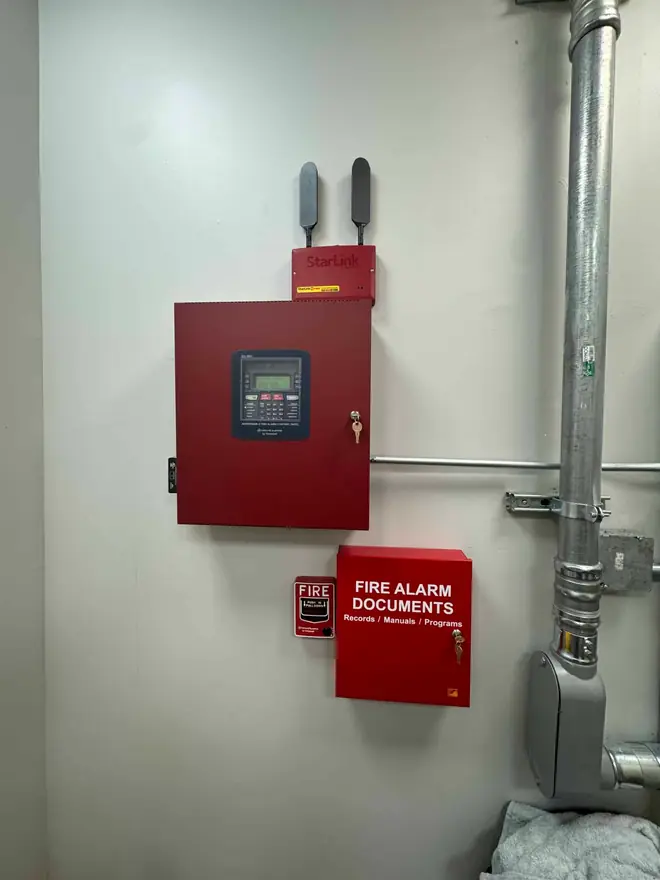
Then there are the spaces outside the sprinkler conversation but still inside the fire protection program. Fire alarm detectors and panels Denver service schedules need to be coordinated with water-based system work because testing often overlaps operationally. When alarm devices activate during sprinkler-related testing, occupants, monitoring providers, and sometimes the fire department all need to know what is planned. That is one reason siloed scheduling causes trouble. Sprinkler contractors, alarm contractors, property teams, and monitoring providers need a shared calendar, not four separate ones.
Alarms deserve their own discipline
A building can be current on sprinkler maintenance and still create needless trouble through poor alarm management. NFPA 72 covers fire alarm and signaling system design, inspection, testing, and maintenance, including monitoring and emergency communications functions. For owners and managers, that means the alarm side of the calendar needs just as much discipline as the sprinkler side.
Denver adds another reason to take this seriously. Local code amendments address false alarms and problematic fire alarm systems, including repair or replacement in some cases when unintentional false alarms repeat, along with reimbursement for some false alarm responses. Put plainly, repeated nuisance activity is not just embarrassing. It can become an enforcement and cost issue.
Fire alarm false alarms Denver problems often trace back to preventable causes. Devices are dirty, construction dust reaches detectors, tenant improvements alter airflow, panel history is ignored, or a known fault gets reset repeatedly without a real fix. A good calendar reduces those habits. It creates a predictable cadence for inspection, testing, repair follow-up, and owner review.
This is especially important in occupied buildings where management teams are tempted to delay alarm work because access is inconvenient. Delay tends to be expensive. When a panel has been living with a recurring trouble condition for months, the eventual service call is rarely simple. The maintenance calendar should force those conversations early, while the issue is still small.
Monitoring, notification, and local coordination
Some Denver code applications require fire alarm or emergency communication devices to transmit to a central station, commercial monitoring service, or continuously staffed monitoring service, depending on the use and the system involved. That matters because monitoring status has to be part of your scheduling process, not just your installation paperwork.

If you use fire alarm monitoring Aurora CO services or monitoring elsewhere in the metro area, put communication steps directly into the calendar workflow. Before testing, the monitoring provider should be notified. After testing, the account should be returned to normal service and that restoration should be documented. It sounds routine because it is routine, but many avoidable dispatches happen when a building tests equipment without treating monitoring as part of the job.
The same principle applies when inspections affect occupants, security, or building operations. If a mixed-use property has residential units above retail, or if a warehouse runs multiple shifts, test windows and notifications become part of compliance in a very practical sense. The standard may define frequencies, but your calendar has to translate those frequencies into real-world building behavior.
A calendar should track deficiencies, not just appointments
One of the biggest mistakes I see is treating the schedule as proof that everything is fine. A service visit happened, a report was issued, and the date went into the file. That is not enough. The useful calendar is the one that records the deficiency, assigns responsibility, and sets the follow-up date.
NFPA 25 material regularly points out that maintenance findings can reveal a surprising number of out-of-compliance conditions. That should not discourage owners. It should motivate them to use inspections as an early warning system. A failed test or deficiency note is not the end of the process. It is the moment when the calendar earns its value.
For example, if a technician identifies a condition that does not require immediate shutdown but does require corrective action, the building should not wait until next year’s visit to revisit it. The calendar should generate a near-term repair window, an internal owner, and a reinspection if needed. Otherwise the same note reappears year after year, and eventually someone wonders why it was never addressed.
That is also where fire system certification Denver conversations often get messy. Owners sometimes use the word certification loosely when what they really need is documented inspection, testing, maintenance, and correction of deficiencies in line with the applicable standards and local requirements. Clean paperwork is not a substitute for corrected conditions.
The human side of scheduling, access, tenants, and weather
The best technical plan still fails if nobody can enter the right spaces. Calendar design needs to respect how the building actually runs.
In Denver and surrounding cities, schools, medical offices, restaurants, light industrial tenants, and multifamily mixed-use properties all create different access problems. A detector above a conference room ceiling grid is one issue. A suppression component over a busy cooking line is another. A dry system serving a cold dock in February poses a different challenge again.
This is why I like to see annual planning done before the year gets crowded. The building team should look at occupancy calendars, holiday closures, expected tenant improvements, and cold-weather constraints before locking in dates. That matters for sprinkler freeze protection Colorado planning in particular. If a system or space is sensitive to weather, do not wait until the first hard freeze to think about who is inspecting what.
A fire safety inspection Lakewood CO schedule, for example, might not align neatly with the service habits a manager developed at another property in Denver. The standards create a baseline, but local practices and AHJ expectations can influence permitting, coordination, and inspection flow. When hazardous materials or other regulated work enters the picture, local authorities may also require permits and inspections, so lead time matters.
How to build the calendar without overcomplicating it
You do not need fancy software to get this right. A spreadsheet, a shared calendar, and a document folder can work if they are kept up to date. What matters is that the structure is clear and somebody owns it.
At minimum, your internal process should answer five questions every time a task is scheduled:
- Which system or device is being inspected, tested, or maintained?
- Which standard interval applies, monthly, quarterly, semiannual, annual, or multi-year?
- Who needs to be notified before the work begins, including occupants, monitoring, and the AHJ when applicable?
- What documentation must be saved after the visit?
- If a deficiency is found, who tracks the repair and closes the loop?
That is the kind of list worth keeping on a wall or at the front of a maintenance binder. It is short, practical, and hard to misunderstand.
I also recommend grouping tasks by building zone and system type in a way that fits your property. For one building, the riser room may be the natural organizing center. For another, tenant suite or floor may work better. If you have a commercial kitchen fire suppression Denver tenant, keep that system visible on the same master calendar even if a specialty contractor handles it separately. The owner still owns the coordination problem.
A brief example from a mixed-use property
Picture a three-story building with street-level restaurant space, office suites above, a small server room, and an exposed loading area. The restaurant has its own hood suppression system. The server room is protected with a clean agent fire suppression Colorado setup. The loading area relies on a dry pipe sprinkler system Colorado arrangement due to freeze exposure. The office space uses more conventional water-based protection, and the whole property reports through alarm equipment that includes fire alarm detectors and panels Denver tenants rely on every day.
If the manager books one large annual visit in late summer, several things can be missed. The annual event might satisfy part of the need, but it does not replace recurring work at shorter intervals. It also does not account for false alarm history, monitoring communication steps, tenant access, or the separate logic of a kitchen system and a clean agent system.
A better approach is to map the year around the shortest required intervals and then layer the rest on top. The monthly and quarterly checks stay fixed. The annual alarm and sprinkler work is planned during a season with good access. The server room testing is coordinated with IT. The restaurant suppression work is timed to reduce disruption. The winter-sensitive areas are reviewed with freeze protection in mind before cold weather sets in, not after.
That is not glamorous work, but it is the kind that keeps a building from sliding into reactive management.
What owners should ask their service providers
When you hire a contractor, the most useful question is not “Can you do the annual?” It is “Can you help me map every required interval for my specific systems and separate what is due monthly, quarterly, semiannually, annually, and on multi-year cycles?” If they cannot explain that clearly, the calendar will probably stay fuzzy.
Ask how deficiencies are documented and how follow-up is tracked. Ask whether they coordinate with alarm providers when sprinkler testing affects signal transmission. Ask what local considerations may apply in Denver or nearby jurisdictions and whether AHJ confirmation is needed. That matters because Denver’s adopted codes include local amendments, and no owner should assume a template from another city is enough.
If your property has recurring fire alarm false alarms Denver issues, press for root cause work, not just resets. If the building depends on fire alarm monitoring Aurora CO or elsewhere, make sure communication procedures are part of every test plan. If a tenant is asking for a pre action sprinkler system Denver design in a sensitive room, make sure the maintenance calendar is discussed before the project is sold as a simple upgrade.
The payoff is steadier compliance and fewer surprises
A fire protection calendar should do more than fill dates. It should mirror how the standards actually work. NFPA 25 inspection Colorado planning is interval-based, not annual-only. NFPA 72 fire alarm testing Denver coordination is part of the same operational picture, not a separate afterthought. Local amendments, monitoring requirements, weather exposure, and tenant operations all shape what “organized” really means.
When the calendar is built well, a lot of headaches shrink. Reports are easier to find. Deficiencies are less likely to age in place. Monitoring providers know when tests are coming. Occupants get fewer surprises. Management can budget for routine work and multi-year items instead of being blindsided.
Most important, the building is better positioned to do what these systems were intended to do in the first place. Sprinklers are meant to discharge when heat opens them. Alarm systems are meant to detect, notify, and communicate reliably. The calendar is what turns that design intent into a repeatable maintenance reality.